Blog Page 78

7 Days – 7 Kg Less (Cucumber Diet)

0

One of the healthiest vegetables is cucumbers because of the high amount of nutrients they contain such as calcium, magnesium vitamins B, C, E,  iron, fiber etc. These vegetables can detox the body by stimulating and cleaning the digestive tract as well as eliminate the excess water from the body.

Besides the fact it is beneficial for the internal organs, this vegetable is also excellent for the skin.

In this article, we will show you the benefits of this vegetable when it comes to diet and weight loss. We will present you with a diet, which has been proven very effective.

The diet process last for 10 days and all you have to do is consume certain foods and include them in your daily diet and will help you lose 7 kg in one week. This diet is based on cucumbers. Whenever you will feel hungry, you should eat one.

PLAN OF THE CUCUMBER DIET

BREAKFAST:

  • 1 plate cucumber salad
  • 2 hard-boiled eggs

SNACK:

  • 1 peach (lower than 200 gr) 5 plums or 1 big apple

LUNCH:

  • You can have 1 piece toasted wheat bread with a bowl of cucumber salad

CUCUMBER SALAD RECIPE

INGREDIENTS:

  • 200 ml of sour milk or yogurt
  • a pinch of salt
  • 1 fresh onion
  • 400 gr of cucumber

INSTRUCTIONS:

You need to peel and cut the vegetable into small pieces. After that add the salt and mix it well. Then add some milk or yogurt and mix gently. Only add the onion and it is ready to serve.

SNACKS:

Have cucumber shake

CUCUMBER SHAKE RECIPE

INGREDIENTS:

  • a hand of washed spinach
  • some fresh ginger
  • 1 cucumber
  • 1 apple

INSTRUCTIONS:

Only add all of the ingredients in a blender and mix it well. After that transfer the mixture in a glass and drink it fresh.

DINNER:

Consume fruit of your choice (300 gr)

You can notice how this diet is very easy to make and even easier to follow, thus, purchase these foods and get to work. The results are amazing!

Source: http://fullhealthycare.com

DISCLAIMER: THIS WEBSITE DOES NOT PROVIDE MEDICAL ADVICE
The information, including but not limited to, text, graphics, images and other material contained on this website are for informational purposes only. The purpose of this website is to promote broad consumer understanding and knowledge of various health topics. It is not intended to be a substitute for professional medical advice, diagnosis or treatment. Always seek the advice of your physician or other qualified health care provider with any questions you may have regarding a medical condition or treatment and before undertaking a new health care regimen, and never disregard professional medical advice or delay in seeking it because of something you have read on this website.

Mom Thinks Son Is Talking To Husband On Monitor, Then He Runs Out And Says ‘It’s Not Daddy’

0

Using a baby monitor or nanny cam comes with an understanding that you or people you trust are the only ones with access to the feed.

However, we’re seeing more and more stories about parents who discover their monitors have been hacked.

In April 2014, a maniacal man hacked a baby monitor in Cincinnati, Ohio allowing him to spy on all the goings-on inside the nursery. The parents were terrified when they heard three chilling words over their 10-month-old daughter’s monitor: “Wake up, baby.”

And here comes another case: A Long Island couple recently set up a home monitoring system in the hopes it would make an effective nanny cam for their 5-year-old son.

The unnamed mother says her son loves to come home from school and talk to her husband at work through the monitor, which is connected to their cellphones. The dad and son duo enjoy these fun, lighthearted conversations that have become something of a daily tradition.

Then one day, after another video chat via the nanny cam, the little boy darted out from the playroom in a fright and went running to find his mom.

“It’s not Daddy talking to me,” he told her. “It’s not Daddy.’”

When the mother went into the playroom to investigate, she heard the voice of a complete stranger speaking directly to her.

Then she and her husband made an even more terrifying realization.

10 Incredibly Beautiful Towns to Add to Bucket List In Europe

0

1

Dreaming of vacationing in one of Europe’s fairy-tale- isque, postcard-perfect towns? Blessed with abundant scenic beauty, everything from stunning sun-soaked Greek islands to majestic Swiss Alps is worth visually feasting on. There are little-known fishing communities, green hamlets based along mountains, picturesque villages right on the coastal belt and a host of other awe-inspiring towns that will leave you asking for more! Europe isn’t about glitzy wonders of the world and high-end shopping destinations. It is also about the nature splashed beauty of small and relatively unexplored towns. Here is our list of expert recommendations on the top 10 European towns to visit.

1. Manrola, Italy

A popular Cinque Terre town, replete with an assortment of rainbow hued houses carved in stone walls along the alluring Mediterranean coast, Manorola looks straight out of a travel brochure. This tiny fishing community is known for its fantastic wine (read Sciacchetra), Antonio Discovolors’ paintings and a pleasant no-cars rule. Park just outside town and set off on a pollution adventure into this effortlessly gorgeous,

2Colmar, France


Dating back to the 9 th century, this spectacularly colorful town has earned the title of “Little Venice” owing to its network of waterways and cobbled medieval streets. Visit Alsatian village, famous for its exquisite wines and local bakeries (with German and French inspired creations) or witness the charm of Colmar’s Neo-Baroque and German Gothic style architectural structures.

3Hallstatt, Austria


One of Austria’s oldest communities (dating back 5000 BC), Hallstatt is a storybook town in the mountain that features a mining history spanning more than a thousand years. Hallstatt’s prosperity is evident in its pretty square-ringed, ivy hued buildings and gorgeous setting (juxtaposed between an idyllic lake and verdant mountains) on the Hallstatter See banks. This well-preserved and visually stunning town is a treasure of fascinating human history.

4Bibury, England


Nestled prettily on the flourishing green, hilly region of Cotswold, Bibury is known as England’s most photogenic town. First metioned in the Domeday Book (1086), the town dates back hundreds of years. Featuring verdant, emerald meadows, ancient stone houses and the dramatic River Coln, this Enid Blyton style town will sweep you off yourfeet. Visit Arlington Row, famous for its scenic town region and 17 th century sepia colored cottages.

5Giethoorn, Netherlands

Giethoorn Netherlands is all about rustic charm, untouched beauty and simple living. The pristine Dutch town nestled in Overijssel doesn’t have any roads, and is interlinked via an old-world style canal system. Every home features tiny private islands. You can only reach via water or foot as vehicles are parked just outside town. Expect to see beautiful canal ways and farmhouses (dotted with thatched roofed homes) built by 18 th century Mediterranean fugitives. The 1958 flick Fanfare brought the town plenty of global fame.

6Dinant, Belgium


Juxtaposed between Meuse River and a citadel, Dinant is known for its striking architecture and gorgeous, mountain top views. Enjoy a day trip to witness Grotto of Dinant’s waterfalls or head to the Sanctuary of Beauraing (where you can plonk yourself in one of the local open-air cafes), where you can enjoy gorgeous vistas from one of the continent’s most picturesque cities.

7Lungern, Switzerland


Located 2, 460 ft over sea level on the picturesque Lake of Lungern shore, this mountainous town radiates a hard to resist fairy-tale appeal. Apart from the charming Lungern village, this scneic region includes Burglen and Kaiserstuhi settlements, the Obsee hamlet (featuring old-world style homes) and other strikingly pretty communities and natural wonders.

8Reine, Norway

This tiny yet spectacular Norwegian fishing community (located within the Lofoten Archipelaho, a stunning group of islands in the Arctic Circle) speaks straight to the nature lover’s heart. Housing a population of about 300 people (yes, you read that right), this is a great place to enjoy a laidback, slow-paced holiday, eat to your heart’s content and witness the spectacular northern lights phenomenon.

9Lauterbrunnen, Switzerland


Located in one of the country’s most picturesque Alps valleys, Lauterbrunnen is sandwiched between gigantic rocks and lush mountain peaks. With over 72 lashing waterfalls, isolated valleys, vividly-hued alpine meadows and secluded, family-run mountain inns, the town also features one of the largest Swiss conservation regions. Experience the 300 meters high Staubbach Falls, the glacier Trummelbach Falls(gushing past mountains and viewing platforms) and a cable car ride from Stechelberg to Schilthom Mountain (for stunning views).

10Rothenburg der Tauber, Germany


Rotherburg der Tauber is a town in Bavaria, Germany, located strategically between Munich and Frankfurt. Famed for its medieval town center, and surprisingly intact 14 th century city wall, the quaint little town is unaffected by time. Visit the busy Market Square (filled with tourists), the 13 th century Town Hall Tower, the Medieval Crime and Punishment Museum, Church of St. Jacob and other popular tourist attractions.


5 Anger Management Techniques To Stop Yelling At Kids

0

anger management

Parenting is a tough job, especially when it comes to anger management. Kids often don’t have a very good sense of reasoning, which can lead to a lot of yelling, tantrums, misbehavior, and other issues. They don’t understand how social skills work, and at a very young age, they live in their own little bubble.

It’s even harder to keep your cool when you’re exhausted or not having a great day. Tiredness is part and parcel of parenting young kids, after all. Unfortunately, these children also typically haven’t yet developed a sense of empathy that allows them to understand that – so they really push your limits!

This is why it’s so easy to lose your temper. You may want to shout, or yell, or scream at your children, especially when they aren’t listening to you for the hundredth time. But this is extremely damaging to a young child. They are 100% dependant on you, and they need you to be the mature, bigger person in the situation.

You are the adult, after all! It’s your responsibility to keep your cool when the going gets tough, especially around your vulnerable, susceptible, and easily influenced children.

HERE ARE 5 ANGER MANAGEMENT TECHNIQUES TO STOP YELLING AT KIDS

1.    LEARN TO COMMUNICATE EFFECTIVELY

Toddlers and young children are nothing like adults. They rarely ever listen to yelling. It catches their attention for a moment, but they’ll be lost in a different world again just moments later! This renders any attempt to get their attention by shouting at them either completely ineffectual or just plain harmful.

It’s definitely frustrating to feel like you aren’t being heard – especially if you’ve been talking about some topic again and again. If you keep having to say things again and again to no effect, you likely haven’t been speaking to your child in a way that they truly understand. Here are some tips, which will also aid you in anger management: (1)

A)    — USE FIRM LANGUAGE, CALMLY

You can sound strict and as though you won’t take no for an answer while also sounding (mostly) relaxed.

B)    MAKE EYE CONTACT

Your child is more likely to take you seriously if you maintain eye contact with them, and you will be able to check to make sure they’ve comprehended what you’re saying. You can even kneel or lean down so you’re on their eye level.

C)    KEEP IT CONCISE

If you drone on and on about one point for a long time, your child is going to slowly but surely tune it out. Get to the point, make sure they understand, and leave it at that.

D)    BE CONSISTENT

Remain consistent about the good behavior you expect. Don’t change your expectations every other day, as this will just confuse your child and prevent them from following instructions.

E)    DON’T GIVE IN

If you told your child to complete a task, and they still haven’t been doing it, don’t “give up” on them by rolling your eyes and completing the task yourself. If you do, you’ll teach your kid that if they can ignore you long enough, they’ll get to escape tasks. No matter how long it takes, stand your ground!

F)     LISTEN

Sometimes, your child is protesting for a reason. Listen to their explanations and complaints. Make sure they know that you “cannot hear” them unless they speak politely and properly. Once you’ve heard their side, make a more informed decision about your next step.

2.    PREPARE BEFOREHAND

A Yale professor of child psychiatry and psychology, Dr. Alan Kazdin, has a unique but important series of steps for more efficient, calmer, and more positive parenting. He refers to this as the ABCs program. Here’s how it goes: (2)

A)    ANTECEDENT

This portion of the program involves preparing your child for what they are expected to do well before they may actually need to do it. This will allow them to prepare for it and keep it in mind.

As an example, if you want your child to put their dishes away after eating, start by telling them anytime before a snack that they must do this. It can be as simple as, “Please put your dishes in the sink once you’re done eating your snack!”

B)    BEHAVIORS

This step is all about reinforcing and molding the behavior you want. It is your responsibility to ensure this happens; after all, many children learn by example! So if you’re trying to teach your kids to put their dishes in the sink after eating, make sure that you’re doing the same with your own dishes.

C)    CONSEQUENCE

Consequence is the stage where you show positive reinforcement to your child for engaging in the correct behaviors. Once your child puts their dishes away, give them very big, obvious praise and a hug or other type of physically affectionate sign of approval.

You need to make sure your praise is very loud and large in order for it to be noticed, and for your child to associate it with a good thing they’ve done. Don’t be afraid to act like you’re a theater actor!

Another good way to prepare beforehand is by being aware of your anger levels. If you feel yourself start to get annoyed, prepare yourself and your children. Tell them what the problem is, such as:

  • You’ve had a bad day at work
  • You really need to focus
  • You’re feeling very tired
  • You are concerned for their safety
  • You are becoming irritated because of their fighting or arguing

Phrase it in a positive way and communicate with them. Ask them to kindly tone it down as a proactive approach to anger management. If you need to, redirect their attention and re-state your position and requests more firmly until they listen to you.

3.    LEARN TO UNDERSTAND YOUR OWN ANGER MANAGEMENT PROCESS ACCURATELY

Anger may seem complex, but it’s a surprisingly simple emotion. If you learn to understand and interpret your anger, you will be able to respond to it in a more positive way that is more proactive and less reactive. Here are some tips to help you do so: (3)

A)    IDENTIFY THE ROOT

Anger is a secondary emotion. This means that it does not exist on its own; it arrives as a bolster for other negative emotions. So the next time you experience anger, take a deep breath and think about it.

Try and take note of any feelings you are experiencing that are hidden behind anger. You may be feeling:

  • Sad or upset
  • Fearful
  • Panicked
  • Stressed
  • Embarrassed
  • Overwhelmed
  • Helpless

B)    FIGURE OUT WHAT TRIGGERS YOU TO START YELLING

Different parents have different anger triggers. If you know what yours are, you can anticipate and prepare for them beforehand, preventing you from blowing up when you encounter them.

Some examples of common triggers a parent experiences are:

  • Certain phrases said by children, such as …
    • “I don’t wanna!”
    • “You can’t make me do it!”
    • “Why can’t I?”
    • “Are we there yet?”
  • A certain negative behavior (example: leaving toys uncleared, fighting with siblings, talking back, etc.)
  • External factors coupled with mild misbehavior (example: needing to cook dinner but your children are whining, having to focus on work but your kids won’t stop playing too loudly, etc.)

C)    TAKE NOTE OF PHYSICAL RESPONSES

Many people experience physical changes when they become angry. If you take note of these responses in your body, you’ll be better able to detect when you need to use some positive anger management. Your body might be telling you that anger is on the rise, even if your brain hasn’t quite caught up. Some common signs of anger include:

  • Reddening face
  • Quickened pulse or heart rate
  • Clenched fists
  • Tightened muscles
  • Shallow breathing

D)    UNDERSTAND ITS PURPOSE

Anger does not arise from nothing, or for no reason. You are angry because certain things aren’t going smoothly, or as needed. By understanding why you get angry, you can understand the steps you need to prevent things from going in that direction.

4.    TAKE A BREAK

positive-thinking

Too angry? Walk away and take a break. When you feel your anger mounting to uncontrollable levels, step out of the room. Tell your child that you are too angry to continue the discussion and that you are going to go and take a timeout.

When away, breathe deeply. Sit down, close your eyes, and focus on your breathing. Go to the bathroom or to a nearby sink and give your face a wash. Freshen up a little. If it helps, you can even say a mantra or positive affirmation to yourself about keeping positive thinking in these times. (4)

You can use mantras like:

  • I will only show love.
  • My child needs understanding and patience.
  • This situation is not a disaster.
  • My child only acts out because he has trouble with (insert issue here).
  • I will be patient today.

5.    PRACTICE, PRACTICE, PRACTICE

Nobody is perfect, and if you’ve been yelling at your kids as a bit of a habit when things go wrong, it’s hard to unlearn the behavior. The trick lies in continual practice and lots of positive thinking.

Anger management is crucial to good parenting. You can learn to be calmer, or you can find healthy outlets for that anger. Some practices for calmer thoughts include:

  • Mindfulness meditation
  • Keeping a journal to record gratefulness and express your thoughts
  • Practicing yoga

Some healthy (or usable) outlets for anger include:

  • Practicing sports
  • Writing in a journal about your anger
  • Making art that expresses your anger
  • Screaming into or punching a pillow

If you choose to use outlets for anger, make sure you are doing so in private or away from children if it is not a commonly accepted activity!

FINAL THOUGHTS ON SOME ANGER MANAGEMENT TECHNIQUES TO STOP YELLING AT KIDS

If you’ve shouted at your child in the past, it’s time to stop and learn alternative methods of getting through to them. A lot of emotional and mental damage can come from yelling at your kid, especially if this includes unfair name calling, disrespect, and verbal abuse. In fact, it’s just as bad as physical hitting and punishment. (5)

They can learn improper anger management techniques from this treatment. They can begin to exhibit similar behaviors to yours. Or, in some cases, they may withdraw altogether. Even when they seem fine, their developing brains are still impacted in some way or other, and it will have a harmful effect on them later in life.

Studies indicate that positive reinforcement is a much better system for children than negative reinforcement. This is why learning to manage your anger can be more beneficial for both you and your kids. It’ll help them behave better, and it’ll give you more breathing space!

So, while it can be hard to keep calm when your kid is being naughty, take a deep breath and get your positive thinking going! Use these 5 anger management techniques to stop yelling at kids and build a healthier, happier, and more effective parental bond with your little one.

10 Things Itchy Skin Says About Your Health

0

10 Things Itchy Skin Says About Your Health

itchy skin

Did you know that itchy skin is an actual medical condition? The medical term for “an uncomfortable, irritating sensation that makes you want to scratch” is pruritus (pronounced proo-RIE-tus).

PRURITUS

Pruritis is a common condition that usually goes away with minimal treatment. For instance, using moisturizer, bathing with lukewarm water, or using gentle cleansers often helps relieve itchy skin. Long-term treatment typically requires identification of the cause of itchy skin and the use of medications.

  • Common co-symptoms of itchy skin include:
  • Bumps, blisters, or spots
  • Dry and cracked skin
  • Scaly, leather-like skin
  • Irritation and redness

Itchy skin that lasts longer than a couple of weeks requires evaluation and treatment by a medical doctor (preferably a specialist – e.g. dermatologist). Prolonged itching and scratching of the skin can lead to further complications such as anxiety, depression, or insomnia. The skin can also become infected, injured, or scarred. Itchy skin that lasts for longer than a few weeks may be indicative of a severe disorder.

WHAT SKIN SAYS ABOUT YOUR HEALTH

“Your skin can be a window to your underlying health, says Wake Forest University’s Joseph Jorizzo, MD, one of the experts who literally wrote the book on signs of internal disease. Many underlying health conditions – some very serious – first appear as skin problems.” – WebMD (source)

Our largest body organ is the skin, measuring over 20 square feet in length and weighing around eight pounds (3.6 kilograms). Besides being an elaborate “cover,” the skin provides many essential functions. Of course, the first priority of the skin is to serve as a barrier between an unstable (and often toxic) environment and our innards.

The skin consists of three layers – the dermis, epidermis, and hypodermis. The epidermis is the outermost layer and acts as a waterproof barrier. The pigmentation process that gives us our skin color also takes place in the epidermis. The activity of melanocytes, cells that produce the coloring pigment, melanin, determine a body’s skin color and tint.

The dermis consists of connective tissue, hair follicles, and sweat glands. The hypodermis is a combination of connective tissue and fat, the presence of which helps to protect delicate parts of the body immediately below.

THINGS ITCHY SKIN SAYS ABOUT YOUR HEALTH

  1. BUTTERFLY RASH: CONTACT DERMATITIS, LUPUS, ROSACEA

Butterfly rash is usually the first sign of lupus, an autoinflammatory disorder characterized by inflammation of the skin. Symptoms of lupus can range from mild to severe and include fatigue, fever, hair loss, kidney complications, gastrointestinal problems, swollen joints, and thyroid problems.

Butterfly rash may also indicate other conditions such as contact dermatitis or rosacea. The former is usually caused by irritation from a substance in things like cosmetics, fragrances, jewelry, and plants. Rosacea is a skin disease characterized by skin flare-ups and remissions. Symptoms of rosacea include bumps and pimples, eye irritation, facial redness and swelling, and skin thickening.

  1. SKIN PLAQUE: PSORIASIS

Skin plaque is an itchy, elevated lesion most commonly associated with psoriasis. Also known as primary lesions, skin plaque may appear to be flat even though it is elevated. Plaques may have definable borders that may arise as different shapes and take on a reddish, scaly appearance. Such skin plaque shapes include:

  • Half-moon shaped
  • Ring-shaped
  • Snake-shaped
  • Multicolored

Skin plaques most often appear on the elbows, knees, lower back, and scalp. A specific type of skin plaque – leg plaque – may appear red on the edge and gold-colored in the center.

  1. PURPLE, FLAT-TOPPED LUMPS ON THE WRIST: HEPATITIS C

Purplish, flat-topped bumps are most commonly linked to hepatitis C. These bumps usually itch terribly and may be located anywhere on the body. Commonly affected areas include the legs, lower back, genitals, and neck.

Hepatitis C is both a virus and an infection. The virus leads to the infection, which affects around four million people in the U.S. alone annually. Hepatitis C often doesn’t carry noticeable symptoms, with about 80 percent remaining symptom-free. Acute symptoms of the disease may include abdominal pain, dark urine, decreased appetite, joint pain, jaundice, nausea, and vomiting.

  1. FLESH-COLORED LESIONS ON THE BACK: TUBEROUS SCLEROSIS

Tuberous Sclerosis is a serious, potentially life-threatening disease that may cause the development of elevated, irritated, flesh-colored lesions on the body. These patches are also called shagreen patches and have a texture resembling an orange peel. Shagreen patches may appear across the cheeks, nose, and torso.

Tuberous sclerosis causes the growth of benign tumors in the brain and other vital organs. Symptoms of the condition may include abnormal heart rhythm, calcium deposits on the brain, developmental disabilities, and intellectual disabilities.

  1. CHRONIC ITCH: NEUROLOGICAL DISORDER

Itches that do not find even temporary relief by creams and other well-accepted topical medications may arise from a neurological condition. The urge to itch arises from the activity of the brain and nervous system, and scientists have discovered that misfiring of this system can create unexplainable itchy sensations.

For example, the peripheral nerves extend from the spinal cord to the skin and throughout the body. If these nerves become damaged, they can become too sensitive, leading to itching sensations.

  1. SWOLLEN, PALE-RED BUMPS (HIVES): VARIOUS CA– USES

Hives are a type of skin outbreak characterized by burning, itching, or stinging skin. Hives may appear anywhere on the body, and commonly show up on areas of the face, ears, throat, or tongue. Similar to hives is angioedema, an allergic reaction that causes swelling directly underneath – as opposed to on – the skin.

The release of histamine causes angioedema and hives, which sometimes leads to blood plasma leaking from blood vessels. Conditions that may cause this include allergy, certain medicines (including aspirin and NSAIDs), insect stings, and sunlight exposure.

  1. SCALY, RED, DRY PATCHES: PSORIASIS

Scaly, itchy, red patches that form on the arms, elbows, knees, hands, and other parts of the body are often linked to psoriasis, a chronic skin condition caused by an overactive immune system. Common symptoms of psoriasis include inflammation, skin flaking, and the presence of “thick, white, silvery, or red” patches of skin.

Psoriasis is not a curable condition but can be symptom-controlled through the use of topical treatments, systemic treatments, or a combination of both.

  1. ITCHY BUMPS OR BLISTERS: CELIAC DISEASE

Dermatitis herpetiformis (DH) is the skin manifestation of celiac disease, an inflammatory bowel disease (IBD) which arises from an impaired immune response to eating the wheat protein gluten. DH signals the mucosal system of the intestines to release immunoglobin A (IgA), a type of antibody. IgA travels through the bloodstream and binds to skin cells, producing blisters or bumps. These extremely itchy bumps and blisters often arise in areas of the buttocks, elbows, and knees.

Topical medications can provide relief for itchy skin caused by DH. Celiac disease is manageable through diet. Continued consumption of gluten may result in health complications such as anemia, bone density loss, malnutrition, or ulcerative colitis – a more severe inflammatory bowel disease.

  1. ITCHY, RAISED WELTS (OR HIVES): ALLERGY

Exposure to allergens may lead to the growth of welts, which may become itchy. These bumps are also called hives. Besides itching, hives often sting or burn. Allergic hives may appear anywhere on the body and vary widely in size.

Hives brought on by an allergic reaction are often due to something (like a chemical) that has been inhaled or ingested. Hay fever, also called allergic rhinitis, may also cause hives. Allergic sensitivity to airborne mold spores or pollens are common causes of hay fever.

  1. BLISTERS AND BURN-LIKE MARKS ON HANDS AND FOREARMS: ECZEMA

Eczema is a blanket medical term for a group of conditions that cause the skin to become inflamed. Eczema affects around 30 million Americans, making it one of the most prevalent skin conditions in North America. The skin condition is often seen in babies and children, who often develop rashes or blisters on their cheeks and chin.

itchy skin

Complicating the itchy sensations brought on by eczema is that scratching affected areas can spread it to other parts of the body. Several types of oral and topical medications may be helpful in relieving eczema symptoms.

FINAL THOUGHTS: WHEN TO SEEK MEDICAL TREATMENT

As mentioned, it is common to occasionally experience itchy skin. Most causes of skin itch – dry skin, acute rash, etc. – are relatively harmless. However, itchy skin that lasts longer than 2-3 weeks and doesn’t improve with self-care measures should be evaluated by a doctor or specialist (dermatologist).

Consider visiting a medical professional under the following circumstances:

  • The itch is severe.
  • Skin irritation interrupts your daily routine or your sleep.
  • The skin problems surface suddenly and without explanation.
  • Skin anomalies spread throughout the body.
  • Skin issues are accompanied by symptoms such as exhaustion, fever, blistering, changes in bowel habits, weight loss, or insomnia.

If the condition lasts for 2-3 months despite doctor intervention and treatment, see a dermatologist to be evaluated for skin disease and an internist to be evaluated for other diseases.

Creepy stranger drags 12-year-old back to car when boy remembers parents’ lesson to outsmart him

0

12-year-old Duncan was walking home from his cousin’s house when a man drove by in a car and tried to snatch him from the street.

In a move that’s every parent’s worst nightmare, the despicable stranger attempted to lure Duncan with the promise of candy.

As Duncan crossed the street near a local park, he noticed a car parked on the corner.

Suddenly, the man behind the wheel started yelling at Duncan, trying to lure him with sweets.

“Hey kid, do you want some candy?” he asked.

But the creep wasn’t prepared for Duncan’s ingenious trick – one that taught the man a lesson he won’t soon forget…

Image Source: Yahoo!

That men and women lurk around schools or on the street and try to lure children into their cars with gifts is nothing new.

Parents have been warning their kids against the promise of sweets and puppies from strangers for a long time now.

Yet when 12-year-old Duncan was walking home from his cousin’s house, he grew anxious when he passed a stationary car with a suspicious looking man inside. The man wound down his window and, as per Fox13, shouted:

“Hey kid, do you want some candy?”

Duncan immediately gave a defiant ‘No’ to the question, but the stranger wasn’t dissuaded.

He proceeded to step out of his car, walk towards Duncan and reportedly grabbed him by his shirt.

Image Source: Yahoo!

Duncan’s retaliation

He then attempted to drag Duncan towards his car. It was then that the 12-year-old turned to a brilliant trick that his parents had taught him.

Only for geniuses: Can you find the boy hiding among the girls?

0

Solving different puzzles is a big part of my life. I think it’s a perfect way to relax and pass the time! It may sound strange that you relax by concentrating on something, but afterward, my head feels lighter and my thoughts seem clearer.

Then, of course, it doesn’t hurt that I get to satisfy my competitive instinct. The emotions and feelings of overcoming a challenge are something else!

The puzzles can vary, anything from crosswords to sudoku seems fun to try. Lately, I’ve been exploring other types of tests, like the one below, for example.

Brain exercise, just as physical training, is very important to live a long and happy life. Especially when you get a little older, it’s important to keep the mind active. One way to move those neurons is to solve different types of puzzles.

Can you find the hidden boy among all the girls?

This kind of test has gotten pretty popular lately, especially in online forums and groups, since they are fun and exciting to solve.

This particular one is quite difficult, most people need between two and ten minutes to solve it.

Okay, here comes the challenge.

Below you can see a picture with a bunch of girls, but somewhere in there, a boy is hiding. Can you find him?

That said, this one is hard but take your time and try to find the boy.

Here’s the answer

Did you solve this puzzle? If yes, well done!

If you didn’t, check the answer below.

There he is! Hiding in the left corner close to the bottom, hard to find among all the girls!

Did you manage to find the hidden boy? Then press that SHARE button and see if your friends can find him as fast as you!

[source]

Fire Tornado Captured In Israel, Stunning Video Will Leave You Speechless

0

A fire tornado or the fire vortex is, however, a very rare phenomenon in which fire, under appropriate conditions (air temperature and air currents), acquires the ability to vertically swirl. This creates a tornado-like fire vortex, typically 10 to 50 meters tall.

Some fire tornadoes can reach altitudes of more than a kilometer, with winds inside exceeding 160 kph.

A smaller fire tornado was also witnessed in Israel a few days ago, and the scene captured on camera took many people’s breath. Take a look at how this rare natural phenomenon looks like!

Source: klipland

Sick Girl Captures The Internet With Sweet Reaction After Man Plays On Guitar

0

reaction will surely make your day happier too.

Mother Shayla also said that the damage to Audrey’s brain has also caused her to be diagnosed with Optic Nerve Hypoplasia, Epilepsy, Dystonia, Spastic Quadriplegia (CP), Clonus and Spasticity. But she is still her little warrior!

Source: klipland

Hurricane Dorian Unleashes “Pure Hell” & “Absolute Devastation” On The Bahamas As It Rages On

0

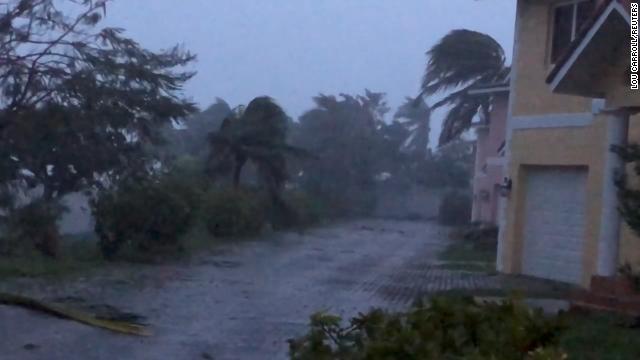
Absolute devastation, there really are no words, it is pure hell here on Marsh Harbour on Avoca Island in the northern part of the Bahamas,” said ABC News correspondent Marcus Moore.

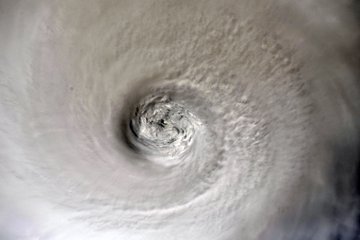
Shredding roofs, flooding homes, and bringing life to a standstill, Hurricane Dorian has left people scared for their lives and desperate to get in touch with loved ones who are living in and around the storm-affected area.

For hours, the hurricane remained over the island of Grand Bahama and Hubert Minnis, the Bahamian Prime Minister, called it a “historic tragedy in parts of our northern Bahamas”, as reported by The Guardian.

Being the most powerful storm to have hit the Bahamas in recorded history, Hurricane Dorian has claimed the lives of at least five people in the Abaco Islands and left 13,000 homes destroyed or in need of severe repair.

CNN

@CNN

“That’s my kitchen window that water is hitting, and that has to be a minimum of about 20 feet above the ground.” Bahamas Minister for Agriculture Michael Pintard describes flooding from Hurricane Dorian at his house in Grand Bahama. https://cnn.it/32oE4Dq 

Embedded video

786 people are talking about this

Shani Bowd, who lives in the Bahamas, could do nothing but stay in her house as the water rose all the way up to her shoulders.

“Every room in the house was filled with water, up to maybe about four or five feet. All the furniture floating, you know, the bathroom flowing. Everything is just about ruined. Before that, we put everything up as high as we could,” Shani Bowd told CNN. “Now, the water is probably about down to my knees and it’s still going down. But everything is, you know, floating from room to room. You know, unsanitary, which is the number one reason why we need to get out.”

Demetrius Ivory

@DIvory_WGN

New video. Just horrific.

Embedded video

270 people are talking about this

“I have seen utter devastation here in Marsh Harbour. We are surrounded by water with no way out,” said ABC News correspondent Marcus Moore. “Absolute devastation, there really are no words it is pure hell here on Marsh Harbour on Avoca Island in the northern part of the Bahamas.”

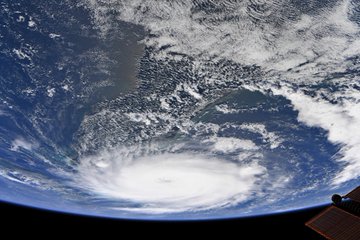
With the storm being alarmingly close to the east coast of Florida, evacuation orders were put in place in Florida, South Carolina, Georgia, and Virginia. According to the National Hurricane Center (NHC), the hurricane had been “stationary” for hours, and forecasts say that it will move towards Florida over Tuesday and into Wednesday evening. Forecasts also say that it may eventually make its way towards Georgia and South Carolina over Wednesday and Thursday.

CNN

@CNN

Hurricane Dorian has stalled over the Bahamas for a second day of punishing wind, rain and floods. Live updates: https://cnn.it/2zHx7B4 

Embedded video

120 people are talking about this

Preparing for the worst, 93 nursing homes and Florida and seven hospitals were evacuated. But some seniors are staying put for now whilst till being ready to leave if things turn for the worse.

“If the winds get over 120 mph, we are going to have to vacate…” 75 year-old Buzz Rossman said, according to CBS News. “I probably can’t run anymore but I can trundle out to my car and take off.”

Christina H Koch

@Astro_Christina

as seen from @Space_Station earlier today. Hoping everyone in its path stays safe.

View image on TwitterView image on TwitterView image on TwitterView image on Twitter
7,066 people are talking about this

Florida Governor Ron DeSantis urged people not to take the risk and, according to Mail Online, said, “This storm at this magnitude could really cause massive destruction. Do not put your life in jeopardy by staying behind when you have a chance to get out”.

ABC News

@ABC

Walk through storm-hit Elbow Cay shows extent of destruction in Hope Town as Hurricane Dorian lashes the Bahamas. https://abcn.ws/2zHCJLJ 

Embedded video

492 people are talking about this

The only thing one can hope for during times like these is that people find ways to help each other out and weather the storm together. One woman was able to do that amidst the raging storm, Chella Phillips opened her home to 97 dogs that were homeless and abandoned.

“It was either leave the dogs on the street to fend for themselves…or do something about it,” Chella Phillips told ABC News. “I just want these dogs to be safe. I could care less about the dog poop and pee in my house.”

It didn’t matter to her that 79 of the dogs were in her master bedroom, as long as they were braving the storm together.

On Facebook, she wrote, “We may not get hit as hard as other islands and the saddest part is that after the hurricane leave the Bahamas, some islands will take a long time to recover… Each island has an abundance of homeless dogs, my heart is so broken for the ones without a place to hide a CAT 5 monster and only God can protect them now. Thank you for thinking of us and praying for us.

CNN Breaking News

@cnnbrk

Hurricane Dorian has stopped over the northern Bahamas. It’s been downgraded to a Category 3 storm and is punishing the island nation with winds well over 100 mph for the second straight night. https://cnn.it/2Lub8mK 

View image on Twitter
315 people are talking about this

The severe devastation in the Bahamas is heartbreaking and taking the necessary precaution to stay safe and out of danger is of utmost importance for everyone residing in the areas that have been warned. Our hearts go out to all those facing those devastating conditions right now.

References:
https://www.theguardian.com/world/live/2019/sep/02/hurricane-dorian-category-5-storm-bahamas-florida-south-north-carolina-updates
https://edition.cnn.com/us/live-news/hurricane-dorian-september-2019/index.html
https://www.cbsnews.com/live-news/hurricane-dorian-update-category-5-storm-landfall-latest-track-path-models-forecast-2019-09-02/
https://www.dailymail.co.uk/news/article-7418967/Hurricane-Dorian-Second-strongest-storm-HISTORY-batters-Bahamas.html
https://abcnews.go.com/US/bahamas-woman-opens-home-97-rescue-dogs-hurricane/story?id=65346987
https://abcnews.go.com/US/extremely-dangerous-hurricane-dorian-expected-hit-abaco-islands/story?id=65323753

POPULAR ARTICLES

HOT ARTİCLE